Share Article


Before the Forecast: How Space-Based Weather Systems Earn Trust
Weather forecasts feel immediate. A notification. A radar map. A warning issued in time. But the data behind those moments is collected far beyond the atmosphere, by satellites designed to observe the Earth continuously and with precision.
A New Standard for Observation
Modern forecasting depends on space-based systems that monitor the planet as a whole. Programs led by organizations like the European Space Agency and NOAA are advancing what is possible through next-generation satellites such as Meteosat Third Generation. These systems provide higher resolution imagery, faster data refresh rates, and more advanced atmospheric sensing.
At the same time, artificial intelligence is transforming how that data is used. Forecasting models are increasingly able to process vast volumes of satellite data in near real time, improving speed and, in some cases, forecast accuracy. The result is a shift from reactive forecasting to predictive insight. Read more on how AI is fundamentally changing the processing paradigm.
Better Models, Higher Dependence
But these advancements introduce a new dependency. The quality of a forecast is directly tied to the quality of the data feeding it. Modern forecasting systems ingest enormous volumes of satellite data continuously, placing increasing importance on data consistency and reliability over time. And that data depends on instruments that must remain stable and accurate over years of operation in orbit. Weather satellites are not just complex. They are sensitive. They are designed to detect subtle environmental changes, which means even minor structural or alignment variations can influence data quality over time.
The Moment That Matters Most
Before any of that data is captured, these systems must first survive launch. During ascent, satellites experience intense acoustic and dynamic loads. For highly sensitive instruments, these conditions are not just a durability challenge, they are a performance risk. Small shifts introduced during launch can affect calibration, consistency, and long-term reliability. And while some calibration can be adjusted in orbit, there is limited ability to correct physical changes once deployed.
Where Trust Is Established
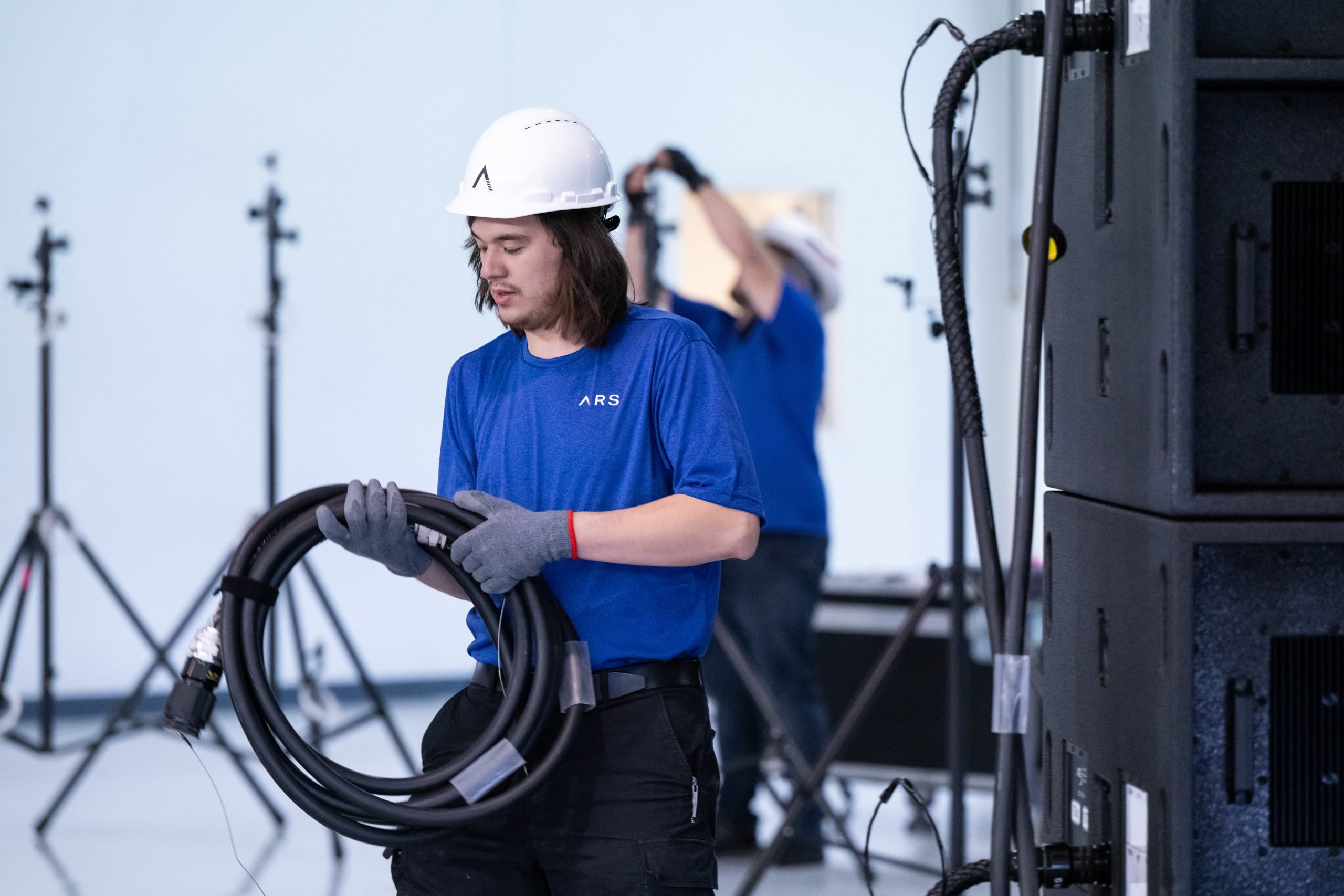
Confidence in a forecasting system is not created when the first image is received. It is established before the satellite ever leaves Earth. Through controlled testing, spacecrafts are exposed to environments that replicate the conditions of launch. The goal is not simply to confirm survival, but to validate performance. At ARS, this includes replicating acoustic environments with precision, verifying structural and instrument response, delivering consistent, repeatable test conditions and reducing uncertainty before deployment.
Why It Matters
In weather forecasting, it’s about more than accuracy and capability. It is about consistency over time. Reliable weather data enables earlier warnings for extreme weather events, more effective disaster response, better planning across agriculture and infrastructure and safer global transportation systems. In many cases, it directly influences safety and decision-making at scale. Long before a forecast is trusted, the system behind it has to be. That is where ARS begins.