Share Article


The Systems Quietly Shaping Life on Earth
Most people do not think about space when checking the weather, navigating across a city, receiving an emergency alert, joining a video call, or accessing medical research.
The systems enabling those moments are largely invisible. They operate silently in orbit, supporting infrastructure that modern life increasingly depends upon. And yet, across navigation, communications, environmental monitoring, medicine, security, and exploration, one reality remains consistent: Before any of these systems can benefit life on Earth, they must first survive the journey beyond it.
Space Has Become Part of Everyday Infrastructure
Over the course of this series, one theme has emerged repeatedly: space systems are no longer isolated scientific achievements operating far from daily life. They have become part of the infrastructure supporting it.
When TIROS-1 launched on 1 April 1960, it returned the first photographs of cloud formations from space. Within two years, meteorologists worldwide were tracking storms that would previously have gone unseen until they made landfall. When Telstar 1 relayed the first live transatlantic television broadcast on 23 July 1962, it demonstrated that orbit could make distance irrelevant. And when the GPS constellation reached full operational capability in 1995, it quietly began restructuring how the world moves, trades, and responds in a crisis — a utility so deeply embedded into daily life that most people never consider its origins.
At the same time, research conducted in orbit is contributing to advances in medicine, pharmaceutical development, and human physiology. Exploration programs are driving new technologies related to robotics, autonomy, energy systems, and long-duration operations beyond Earth.
These capabilities span different industries and missions, but they share a common dependency:
Reliable systems operating in environments where failure is difficult or impossible to correct.
A Period of Accelerated Change
The importance of space infrastructure is also growing at a time when the space industry itself is changing rapidly.
Commercial launch capacity has expanded dramatically over the past decade. Satellite constellations are increasing in scale. Lunar exploration programs are transitioning from short-duration missions toward long-term operational planning. Governments and commercial providers alike are investing in resilient orbital architectures supporting communications, Earth observation, and national security infrastructure.
The Artemis program, expanding Earth observation initiatives led by European Space Agency and NASA, and the continued growth of commercial low Earth orbit systems all reflect a broader shift: Space is becoming increasingly integrated into how humanity observes, connects, protects, and understands the world.
Why Reliability Matters More Than Ever
As reliance on space systems increases, so does the importance of reliability. Many modern spacecrafts are expected to operate continuously for years while supporting systems that millions of people depend upon, often without realizing it. Navigation interruptions, communication outages, degraded environmental data, or failures within exploration systems can carry consequences far beyond the spacecraft themselves.
And before any satellite reaches orbit, every mission must first endure launch.
During ascent, spacecrafts experience intense acoustic energy, vibration, and dynamic loading capable of influencing structures, instruments, and long-term system performance. These environments are among the most demanding phases of any mission, particularly for systems expected to operate reliably over long durations.
Which is why so much of mission confidence is established before launch ever occurs.
The Work Behind the Mission
Environmental testing plays a critical role in preparing spacecrafts for those conditions.
By replicating launch environments on the ground, engineers are able to evaluate structural response, validate system performance, and reduce uncertainty before missions enter environments where maintenance or recovery may not be possible.
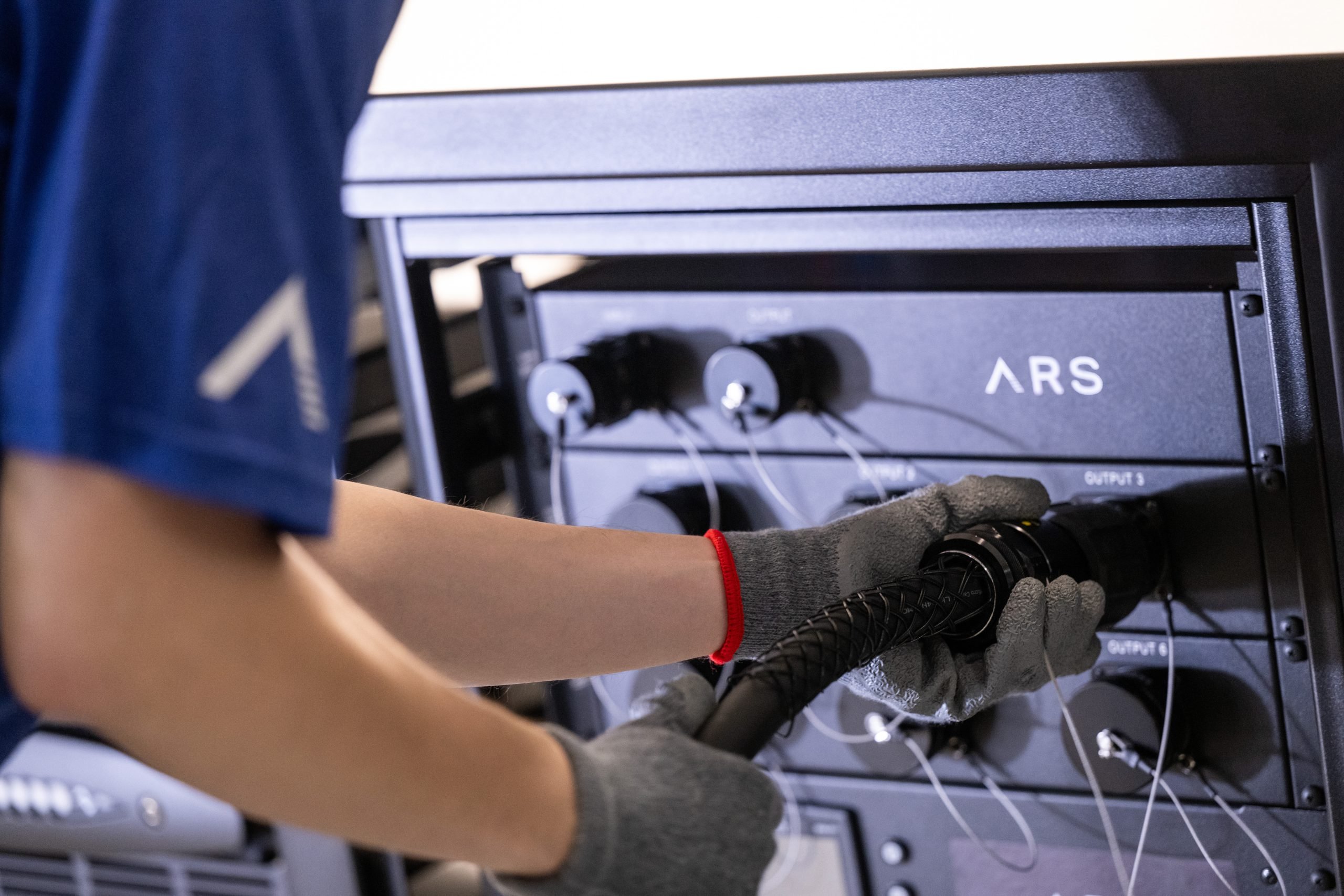
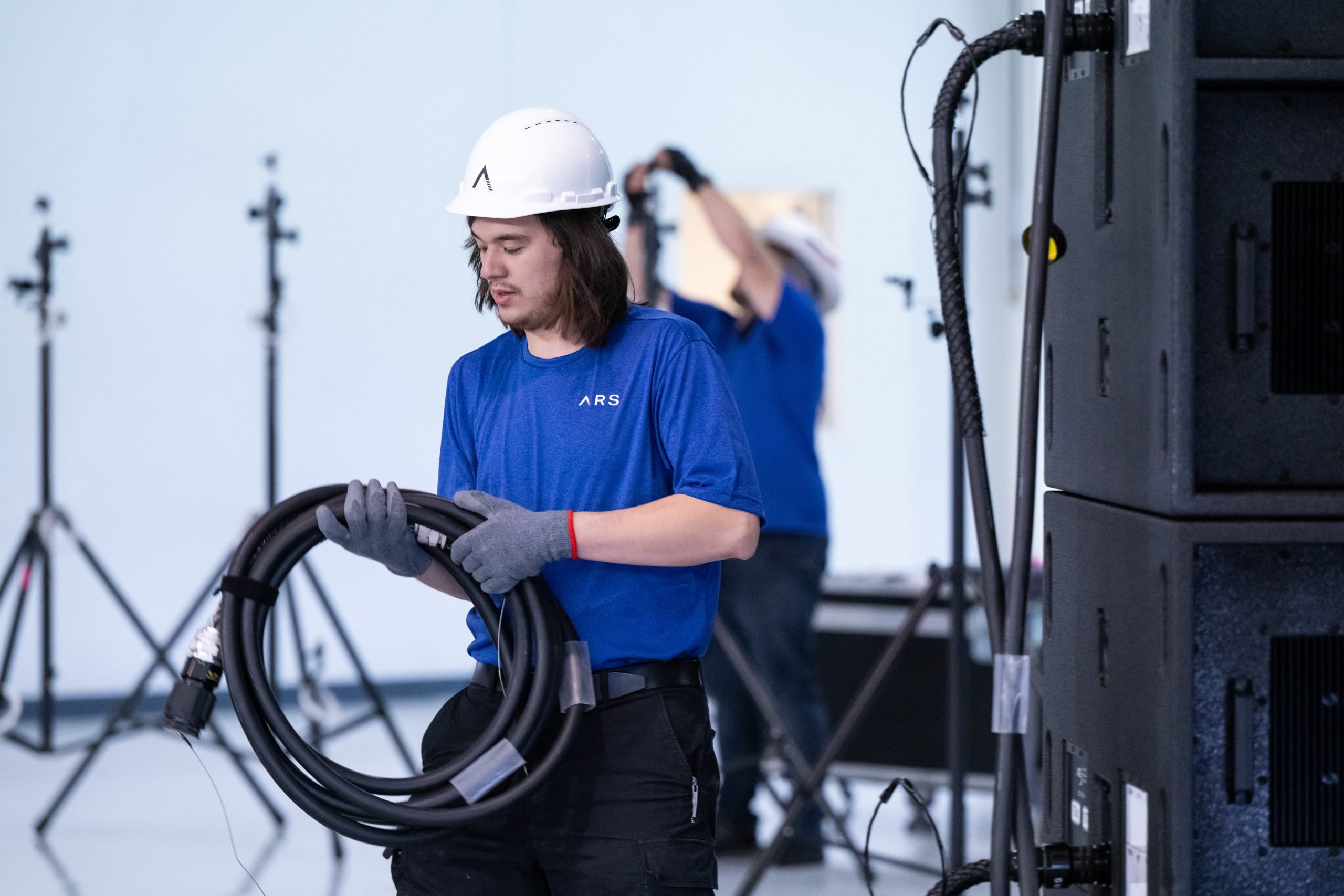
At ARS, this work forms part of a broader effort supporting mission assurance through acoustic testing systems designed to simulate the demands of ascent. While the testing itself often remains behind the scenes, its purpose is foundational: helping ensure that the systems supporting life on Earth perform as intended once they reach orbit.
Why Space Exploration Still Matters
Discussions around space exploration are sometimes framed as distant from everyday concerns.
But TIROS-1, Telstar, and GPS were not designed to become household utilities. They were designed to answer engineering questions that had never been asked before. The technologies that followed — advanced imaging, materials science, computing, medical applications developed in microgravity — emerged the same way. Not as products, but as solutions to problems that only presented themselves beyond Earth.
At the same time, space exploration continues to represent something larger than technological progress alone. It reflects a willingness to invest in long-term capability, scientific understanding, and collective problem-solving at a scale few other fields require.
The image of Earth captured during the Apollo 8 mission — often referred to as “Earthrise” is still widely regarded as one of the most influential photographs ever taken. Not because it showed another world, but because it changed how humanity viewed its own. In many ways, that remains true today.
Space missions continue to expand scientific understanding, but they also remind us that progress is often built through cooperation, preparation, and the pursuit of challenges larger than any single mission itself.
TIROS-1 proved that space could protect lives on Earth. Telstar proved that distance could be bridged from orbit. Apollo 8 proved that leaving our world could change how we see it. None of these were inevitable. Each depended on engineering patient enough, rigorous enough, and precise enough to give fragile systems the confidence to perform in environments no one had yet survived.
ARS plays a quiet role in that story. Not on the launchpad, not in the headlines — but in the work done before any mission begins. One test at a time, helping ensure that the systems quietly shaping life on Earth are ready for everything that reaching orbit demands. The world that wakes each morning to a weather forecast, a navigation prompt, or a satellite connection is shaped, in ways most will never see, by the preparation that happens long before any rocket leaves the ground.