Share Article


The Systems Enabling Humanity’s Return to the Moon
For the first time in more than half a century, humanity is preparing to return astronauts to the lunar surface. But the objective today is different from what it was during Apollo.
The next era of lunar exploration is not being approached as a singular achievement. It is being developed as the beginning of a longer-term presence beyond Earth — one intended to support sustained scientific research, technology development, and eventually deeper exploration into the solar system. That shift is changing how lunar missions are designed, tested, and executed.
From Lunar Missions to Lunar Infrastructure
The Artemis program is focused not only on returning astronauts to the Moon, but on establishing the infrastructure needed to support continued operations there — a fundamental shift from the flags-and-footprints model of Apollo.
This encompasses lunar landing systems, surface mobility platforms, habitation concepts, communication networks, and surface-based infrastructure designed to support sustained human and robotic operations — with emphasis now placed on building directly on the lunar surface following the decision to prioritize surface infrastructure over an orbital Gateway station.
International collaboration has also expanded significantly compared to previous lunar programs. Agencies including European Space Agency, Japan Aerospace Exploration Agency, and the Canadian Space Agency are contributing technologies and mission elements supporting future lunar operations.
At the same time, commercial providers are playing a growing role in transportation, lunar payload delivery, and surface systems development through initiatives such as NASA’s Commercial Lunar Payload Services program. The result is a broader transition from isolated lunar missions to the development of a sustained lunar ecosystem.
Why Returning Now Is Different
The Apollo program achieved six lunar landings between 1969 and 1972, driven primarily by Cold War competition rather than a long-term exploration strategy. Once the political objective was met, the program was cancelled. No infrastructure remained. No systems were left behind. The missions were extraordinary, but they were not designed to be repeated.
What has changed in the intervening decades is significant. Reusable launch vehicles have dramatically reduced the cost of reaching orbit. The commercial space industry has matured to the point where private companies are building and operating lunar landers, not just governments. Decades of continuous human spaceflight aboard the International Space Station have deepened operational expertise in long-duration missions. Advances in autonomous systems, miniaturized electronics, and materials science have made spacecrafts more capable and more resilient than anything available to Apollo engineers. And critically, the motivation has shifted from winning a race to building something permanent.
Artemis is also not operating in isolation. In April 2026, Artemis II became the first crewed mission to travel to the vicinity of the Moon in over fifty years — a milestone that underscores just how much momentum has returned to lunar exploration. China’s Chang’e program has already returned samples from the lunar far side via uncrewed spacecraft and is advancing toward a crewed south pole mission. India’s Chandrayaan-3, another uncrewed spacecraft — successfully landed near the lunar south pole in 2023 — the first mission to do so. Japan and India are jointly developing the LUPEX mission to drill for water ice at the south pole. The Moon has become a destination for multiple spacefaring nations simultaneously, each with their own programs and timelines. That convergence reflects both scientific value and strategic importance.
In a significant program update announced on June 9, 2026, Artemis III has been restructured as a lander demonstration mission — designed to test two commercially developed lunar landers before committing to a crewed surface landing. That landing is now targeted under Artemis IV in 2028. The announcement reinforces the program’s methodical, systems-first approach: validating hardware before extending further.
Why the Moon Matters Again
The renewed focus on the Moon is driven by more than exploration alone. Lunar missions are increasingly viewed as an opportunity to develop and validate technologies required for long-duration space operations. Systems related to autonomous operations, surface power generation, resource utilization, robotics, and habitat sustainability are all being tested within the context of future lunar activity.
Scientific interest has also expanded.
Research into permanently shadowed lunar regions, water ice deposits, and lunar geology is shaping current mission planning. Water identified near the lunar poles may eventually support life-support systems and fuel production for deeper space missions, reducing dependence on Earth-based resupply.
In this sense, the Moon is increasingly being approached as both a scientific destination and a strategic proving ground for future exploration beyond it.
The Challenge of Returning
Despite advances in launch systems and spacecraft technology, lunar missions remain among the most demanding undertakings in spaceflight.
Unlike low Earth orbit missions, lunar systems must operate across greater distances, extended mission durations, and more extreme thermal and radiation environments. Hardware must remain reliable throughout launch, transit, lunar operations, and return.
And before any of those phases begin, every system must first survive ascent from Earth.
During launch, spacecrafts and payloads are exposed to intense acoustic energy, vibration, and dynamic loading that can influence structural behavior and long-term system performance. These environments are particularly significant for exploration hardware expected to operate autonomously and reliably far beyond the possibility of immediate repair.
For lunar missions, reliability is not simply a performance goal. It is foundational to mission continuity and crew safety.
Where Lunar Readiness Begins
Long before astronauts approach the lunar surface or scientific payloads begin operating on the Moon, much of their readiness is established on the ground.
Environmental testing designed to replicate launch conditions allows engineers to evaluate how structures, systems, and sensitive components respond under stress before flight. The objective is not only to confirm survivability, but to reduce uncertainty before missions enter environments where recovery options are limited.
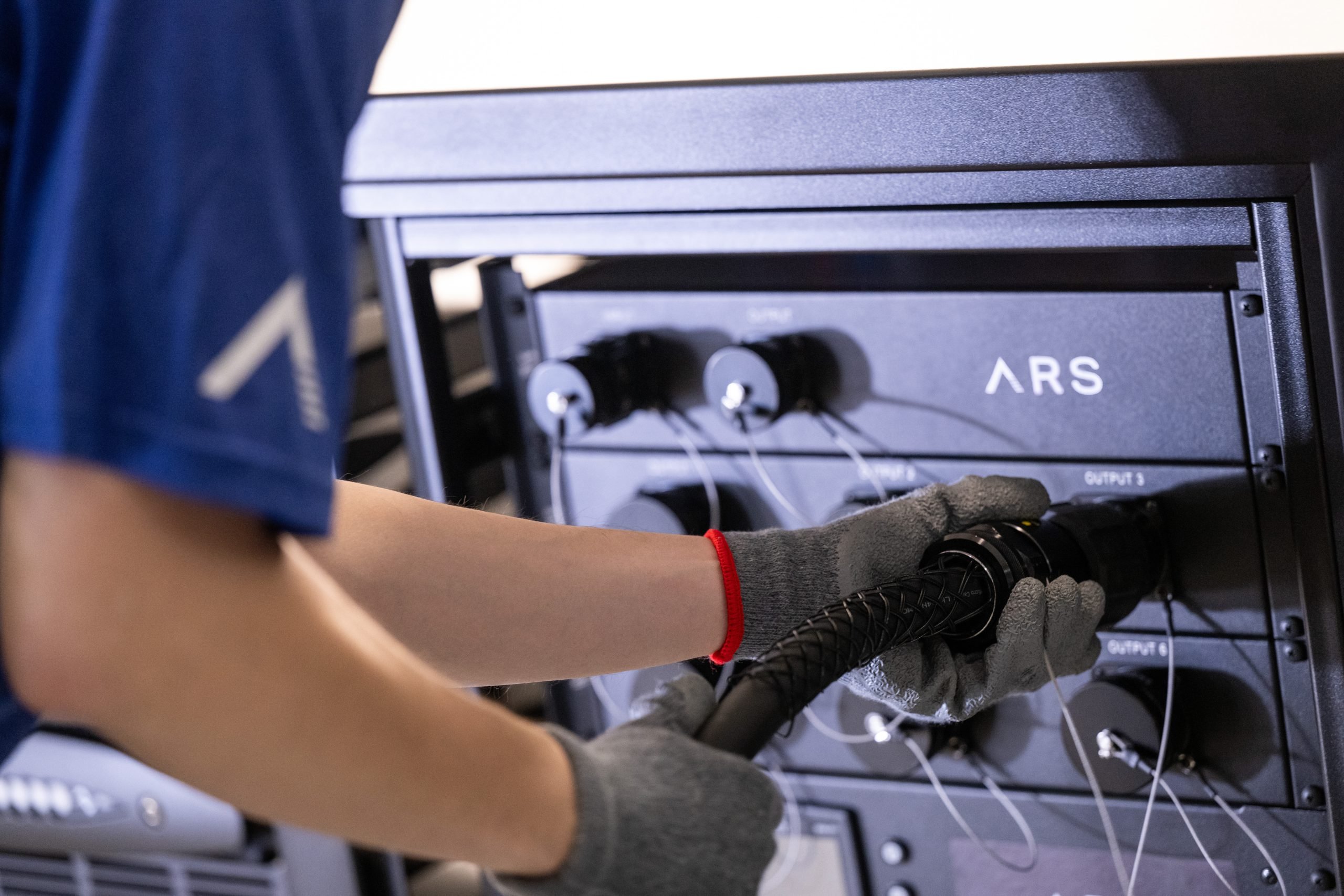
ARS provides acoustic testing services that replicate the stresses of launch, giving engineers confidence that hardware is ready before it leaves the ground. That work has included acoustic testing of the Orion Service Module — which carried the first crewed Artemis mission to the Moon’s vicinity in April 2026 and continues with support for Artemis III.
A Foundation for What Comes Next
The technologies and operational experience developed through lunar programs are expected to shape the future of deep-space exploration more broadly.
Many of the systems being developed for lunar missions, including autonomous navigation, surface robotics, long-duration habitation, and in-space infrastructure — are directly relevant to future missions targeting Mars and beyond.
In that sense, the Moon is increasingly viewed not as a final destination, but as a foundation.
A place where the technologies, operational models, and systems reliability required for deeper exploration can be developed and validated closer to Earth before missions extend further into space.
And while much of the focus is placed on launches, landings, and astronauts, the long-term success of lunar return depends just as heavily on the systems prepared long before those milestones occur.
Returning to the Moon requires more than ambition. It depends on systems that have been rigorously prepared — long before they ever leave Earth.